
“You want to know what I’ve learnt after living in Lone Creek all my life? I know the snow bleeds here …”
Former police officer Dean Matheson has been playing it safe since the case that cost him almost everything. But working as a PI doesn’t quite cut it, that is until a British woman walks into his office with a job that Dean can’t resist.
The woman’s daughter, Hannah Walker, and her friend Jodie have gone missing whilst working at a ski resort in Colorado. It’s clear there’s something sinister about the girls’ disappearance, but then why are the local police department being so unhelpful?
So begins Dean’s journey to Lone Creek on the trail of the missing girls – and he’ll soon find out that in Lone Creek, everyone has something to hide …
Book trailer: https://youtu.be/Wq_3DounAQM
Amazon (universal link): http://viewbook.at/WhereTheSnowBleeds
Kobo: https://www.kobo.com/gb/en/ebook/where-the-snow-bleeds
Apple books: https://books.apple.com/us/book/where-the-snow-bleeds/id1466771293
GooglePlay: https://play.google.com/store/books/details/Wendy_Dranfield_Where_the_Snow_Bleeds?id=WGSbDwAAQBAJ
Nook: https://www.barnesandnoble.com/w/where-the-snow-bleeds-wendy-dranfield/1131939239?ean=2940161429013
ABOUT WENDY
 Wendy is a former Coroner’s Assistant turned crime writer who lives in the UK with her husband.
Who Cares If They Die and Where the Snow Bleeds are the first two books in the Dean Matheson series, with more on the way. As well as her crime thriller series, Wendy has written a YA crime novel – The Girl Who Died – and she has several short stories published in UK and US anthologies. She has also been shortlisted and longlisted for various competitions, including the Mslexia Novel Competition.
For behind the scenes gossip and updates on her books (or photos of her cats), follow her on social media!
My website: https://wendydranfield.co.uk/
Twitter: @WendyDranfield
Facebook: https://www.facebook.com/WendyDranfield1/
YouTube: https://www.youtube.com/channel/UC7g8miK6akDG2pFqgGeLFAw?view_as=subscriber

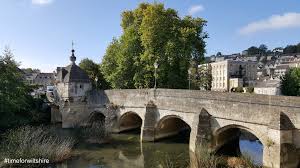
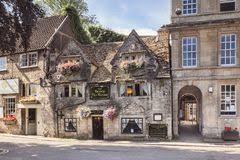 One of my meets was with an old work friend. We met in Bradford on Avon for a light lunch at the double award winning Bridge Tea Rooms near the town bridge. The building dates back to 1502, which means small doorways, low ceilings and beams – not forgetting a couple of well worn steps you need to negotiate as you enter the building.
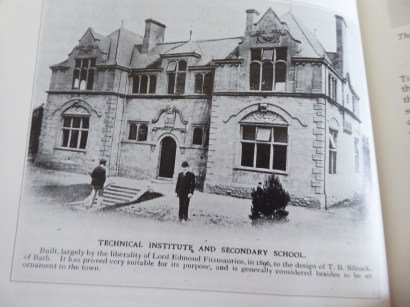
 years after moving to West Wiltshire. Fitzmaurice Grammar School was a smaller school than Marlborough, where I spent my first year. It was also lot closer to home – two bus rides each way as opposed to a daily 30 mile round trip by train. During my first year at Bradford on Avon our form room was at the rear of the school in a long wooden building known as The Gallipoli hut (shown behind the main building in the picture below), which had been erected in 1920. It housed both second years (year 8 in modern speak), the 5th form cloakroom and the male staff room. These huts were like freezers in the winter and saunas in the summer. Thankfully, by the time we reached the third year (Year 9) we
 had moved up to classrooms in the newly-built Physics and Chemistry block. It was in there that the whole class of 3A fell foul of an American exchange teacher. I think the move from a US high school in Philadelphia to a small provincial grammar school was a bit of a culture shock for him. I’m sure this was the reason he appeared to have very little humour and even less patience. On this particular occasion while we were waiting for him to arrive from the main school building a large black Labrador wandered in. As two of the class tried unsuccessfully to catch it and put it out, he arrived. Not at all amused, he wanted to know who had brought the dog into the classroom. When told it had come in by itself he refused to believe us. He gave ‘the culprit’ the chance to own up and when unsurprisingly no one did the whole class was given detention.
 In those days school rules were strict. Any pupil discovered beyond the school gates without their hats or caps were automatically given detention. Eating in the street was another misdemeanour which attracted the dreaded ‘D’. Once a month the headmistress would keep all the female pupils back after assembly. On those occasions we usually had a lecture about short skirts, nail varnish and wearing hair loose below collar length (neither of the last two was allowed). When I see schools turn out today it makes me wonder if she was still around what she would make of 21st century uniform and rules.
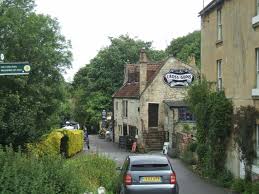 canal to the hamlet of Avoncliffe (picture right) a couple of miles out of town then back along the road and into school. Remembering occasions when the fog came down really thickly I sometimes look back and wonder whether it ever crossed her mind about the danger of sending young girls out in twos and threes along deserted tow paths (in those days the local canal was full of duck week and fallen trees). On really cold days we got into the habit of setting off only to spend our
 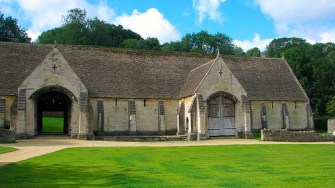 time in Tithe Barn (left) where there was a certain degree of protection from the elements. We had the whole thing down to a fine art; staying there for the right amount of time and then sneaking across the railway line and back into town,looking suitably breathless as we struggled back to the changing room!
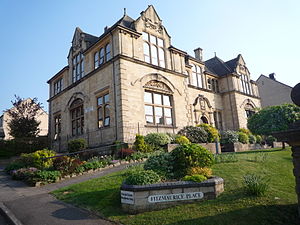 really miss those school days. Most of the teachers are, of course, long gone. The school closed in 1980 and transferred to Christchurch Secondary School at the top of the town (a larger more modern campus with the potential to extend) to become St Lawrence Comprehensive. For several years after the school stood empty and neglected – a sad end for this lovely building. Nine years after closure it was eventually rescued. The main school was converted into accommodation and several new builds added in the grounds to provide 42 upmarket retirement flats with a new name – Fitzmaurice Place. A happy ending after all.
 Originally from Lyon in France, Marie has lived in the Rossendale Valley in Lancashire for the past few years. She writes both contemporary and historical romance, as well as short stories, always with ‘a French twist’. A SPELL IN PROVENCE, her debut contemporary romantic suspense, and historical romances ANGEL HEART, THE LION’S EMBRACE and DANCING FOR THE DEVIL, are published by Accent Press. Her latest contemporary romance, LITTLE PINK TAXI, is published by Choc Lit, and watch out for A PARIS FAIRY TALE, soon to be released by Choc Lit!



 As a writer if there’s one thing I’m grateful for it’s the ability to type. Finishing school I enrolled at college for an OND in Business and Finance with secretarial training. The latter was very much involved with unlocking the mysteries of shorthand, audio typing…and typing.
 total revolution! At last we were all able to say goodbye to aching fingers. Everyone coveted – and I was lucky enough to have – a red IBM Golf Ball typewriter and at the start it took some getting used to. No more keys leaping out of the type basket to make their impact on paper; this circular metal ball covered in letters simply whizzed up and down. There were downsides of course. It wasn’t a good idea to rest your fingers on the keyboard at any time as the slightest pressure on any one key would automatically set it off like a machine gun, leaving a trail of gibberish across whatever you were in the middle of typing. Olivetti also produced an electric daisy wheel typewriter. The beauty of this machine was that you could
  buy replacement wheels with different typefaces making it a very versatile piece of equipment. Today, of course, the computer leaves us spoiled for choice with innumerable typeface options, so different from those dark days!
 used had a small window built into the front to enable text to be edited – very cutting edge at the time. By the late ‘80’s early ‘90’s computers/word processors were beginning to become norm in the provincial workplace (no doubt London and other big cities had had them for some time). My first session on a word processor was surreal. In the past typing had been about movement and noise. Now here I was, sitting in front of a strange detached keyboard. When my fingers hit keys there was a gentle tapping sound but nothing felt as if it had connected with anything else. It was only when I raised my eyes to the screen in front of me that I saw words appearing as if by magic. It was probably as weird an experience as the progression from manual to electric typewriter.
 In early desktop computers WP packages were almost an afterthought and in some instances not very user friendly. Therefore I opted for a dedicated word processor instead, using the computer for spreadsheets and databases. Suddenly it seemed you no longer needed to be able to type to use a computer. Of course it completely transformed how things were done in the workplace. A manager doing his own typing? Shock, horror! That would have been unheard of during my early years at work. Then it was all about dictation and audio tapes and getting the secretary to type it all up. It took a little time to adjust to typing on a computer keyboard but I got there and soon worked up to my 80+ words per minute. There is only one problem I have and that is as a touch typist I find it very difficult to build up any speed on a ‘flat’ laptop keyboard. That is why, I guess, I prefer my desktop.
 JO LAMBERT