
Good morning Carol and welcome. Can I start, as always, by asking you a little about yourself?
Good morning, Jo, and many thanks for inviting me round. I live in London and  Cambridge, with my new husband and our ginger cat, and I’ve got two novels to my name, the latest being Hampstead Fever. My novels came after a string of non-fiction books, most of them on health and parenting. I have three sons, including twins, which obviously inspired some of my books. “The boys” are all grown up now, and they haven’t turned out too badly.
You qualified as a doctor, are a medical journalist and have published several parenting guides. How did the switch to writing fiction come about?
I’ve always wanted to write fiction, but I was busy with non-fiction books and health journalism, not to mention being a doctor, so it was difficult to find the time. The creative urge was there all along, though, and eventually I could ignore it no longer. By the time I set out to write a novel, I had a reasonable grasp of the process of producing a book. But, of course, it wasn’t plain sailing. The proof is a drawer full of manuscripts that will never see the light of day.
Your novels are set in London. Are you planning to use this as a base for future stories or would you ever be tempted to use another city?
I enjoy using London, especially North London, as a setting for my novels, but as I also live in Cambridge, you can expect a little more of East Anglia to feature in a future book. I prefer writing about what I know, so I’d never use somewhere I didn’t know well as a location. One of the books I am planning at the moment will be set mostly in Egypt. I grew up in Alexandria and my memories of it are still vivid.
There are a few well known writers who have switched genre – Rom Com to Thriller or Crime is one example. If you were asked to write something other than Contemporary Fiction, what would be your choice?
I’m in awe of anyone who can write a good thriller. I’m not nearly devious or clever enough myself. If I were to choose another genre, I’d go for something completely different. I love writing dialogue, so I think it would be a screenplay.
Can you tell us something about your current WIP?
I’m actually writing two more books. One is the novel I mentioned which is set mainly in Egypt. Unusually for me, the story will unfold from just one point of view. The other book I’m working on will take many of the characters from Hampstead Fever and let them experience changes in their careers, their relationships, and their family lives. Like my first two novels, it’ll be a multi-viewpoint story, with both male and female voices. I like getting inside people’s heads. Maybe that’s the doctor in me.
Describe your writing room. Do you prefer to write in silence or with background music? If the latter, have you any favourites?
I have in the past written under all sorts of conditions. Some of my parenting books were 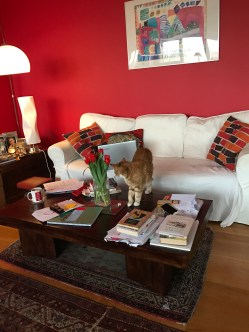 produced two feet away from a computer where my children played Command and Conquer, at full blast. At times I’ve found it productive to write with music on, especially choral music, but nowadays I prefer utter silence. Because I write my first draft in pencil on paper, I can do it in most places. That usually means on the sofa in my living room, but in good weather it can equally be by the banks of the Cam.
And lastly, you’re holding a dinner party and can invite four famous people. Who would they be and why would you choose them?
Barack Obama, Prince Harry, Howard Jacobson and Kate Atkinson. Three of them (Obama, Jacobson and Atkinson) are terrific writers, and they’re all warm, witty and articulate. I think they would each have some great stories to share, which would make for a memorable evening.
 About Carol
Carol Cooper is a writer and doctor. She is a journalist for The Sun newspaper, broadcasts on TV and radio, and has a string of non-fiction books to her name including an award-winning textbook of medicine. Now she writes novels all about complex characters looking for love.
Social media
Blog Pills & Pillow-Talk (URL: http://pillsandpillowtalk.com)
Facebook author page Carol Cooper’s London novels (URL is https://www.facebook.com/onenightatthejacaranda/)
Twitter, Pinterest and Instagram @DrCarolCooper
HAMPSTEAD FEVER
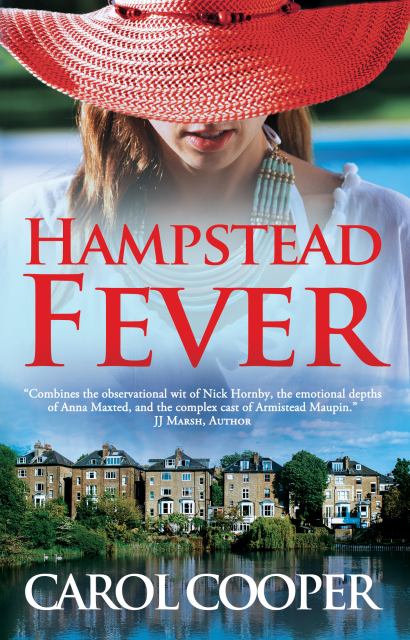
Summertime and the living is…. complicated.
Ex-con Dan should be blissfully happy. He has the woman of his dreams and a job in a trendy Hampstead bistro. But his over-anxious partner Laure, engrossed in their baby, has no time for him.
After surviving serious illness, Sanjay’s got his life back. Now he wants adventure. Where does that leave girlfriend Harriet?
Casual sex with the football coach makes up Karen’s love live. As a single mum of four, romance is on her to-do list, just below laundry.
Stressed doctor Geoff finds solace in the arms of a mercurial actress. But why does she seem intent on upsetting everyone?
In a London heatwave, six people’s emotions rise to boiling point. And the fever spreads.
Purchase links
Widely available in UK bookshops and as an ebook:
Amazon http://mybook.to/HF
Barnes & Noble http://www.barnesandnoble.com/w/hampstead-fever-carol-cooper/1123868072
Kobo https://www.kobo.com/gb/en/ebook/hampstead-fever
iBooks https://itun.es/gb/bmnZcb.l
Google Play https://play.google.com/store/books/details/Carol_Cooper_Hampstead_Fever?id=A6FJDAAAQBAJ
 As a writer if there’s one thing I’m grateful for it’s the ability to type. Finishing school I enrolled at college for an OND in Business and Finance with secretarial training. The latter was very much involved with unlocking the mysteries of shorthand, audio typing…and typing.
 total revolution! At last we were all able to say goodbye to aching fingers. Everyone coveted – and I was lucky enough to have – a red IBM Golf Ball typewriter and at the start it took some getting used to. No more keys leaping out of the type basket to make their impact on paper; this circular metal ball covered in letters simply whizzed up and down. There were downsides of course. It wasn’t a good idea to rest your fingers on the keyboard at any time as the slightest pressure on any one key would automatically set it off like a machine gun, leaving a trail of gibberish across whatever you were in the middle of typing. Olivetti also produced an electric daisy wheel typewriter. The beauty of this machine was that you could
  buy replacement wheels with different typefaces making it a very versatile piece of equipment. Today, of course, the computer leaves us spoiled for choice with innumerable typeface options, so different from those dark days!
 used had a small window built into the front to enable text to be edited – very cutting edge at the time. By the late ‘80’s early ‘90’s computers/word processors were beginning to become norm in the provincial workplace (no doubt London and other big cities already had them). My first session on a word processor was surreal. In the past typing had been about movement and noise. Now here I was, sitting in front of a strange detached keyboard. When my fingers hit keys there was a gentle tapping sound but nothing felt as if it had connected with anything else. It was only when I raised my eyes to the screen in front of me that I saw words appearing as if by magic. It was probably as weird an experience as the progression from manual to electric typewriter.
 In early desktop computers WP packages were almost an afterthought and in some instances not very user friendly. Therefore I opted for a dedicated word processor instead, using the computer for spreadsheets and databases. Suddenly it seemed you no longer needed to be able to type to use a computer. Of course it completely transformed how things were done in the workplace. A manager doing his own typing? Shock, horror! That would have been unheard of during my early years at work. Then it was all about dictation and audio tapes and getting the secretary to type it all up.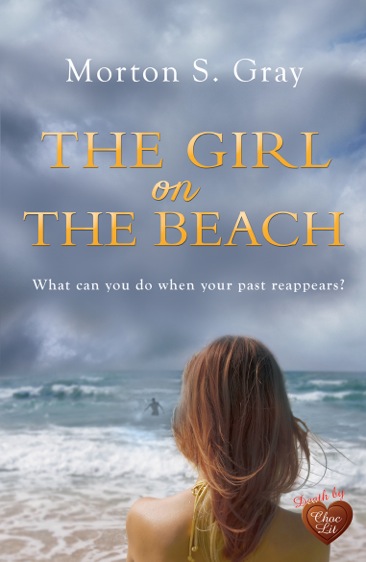

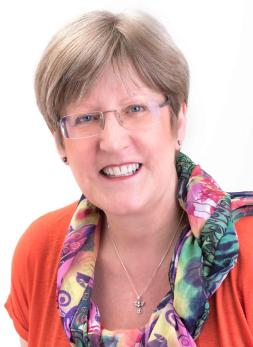 Morton S. Gray lives with her husband, sons and Lily, the tiny dog, in Worcestershire, U.K. She has been reading and writing fiction for as long as she can remember, penning her first attempt at a novel aged fourteen, the plot of which closely resembled an Errol Flynn film.

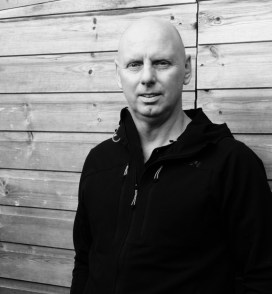 Good morning Rob and welcome. Can I start, as always, by asking you a little about yourself?
 Nothing is as it seems …
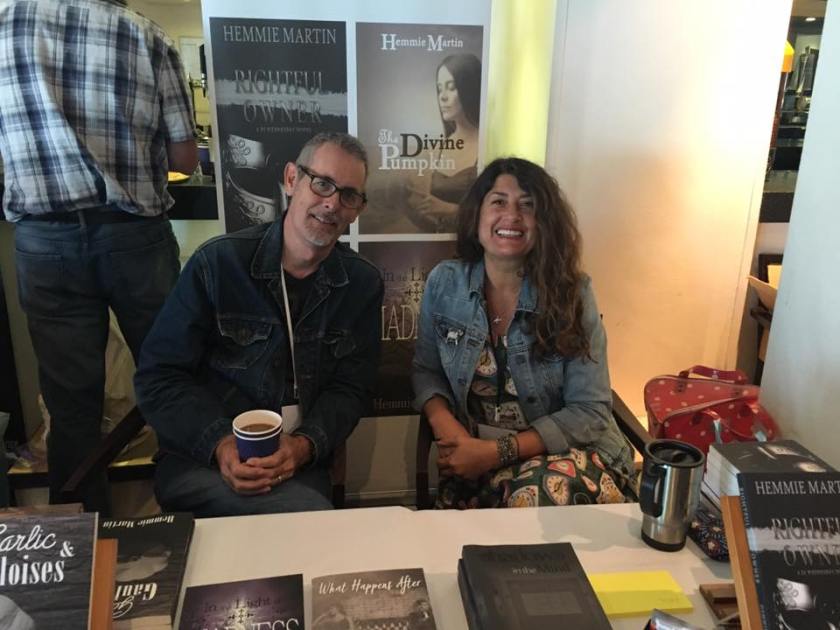 Good morning Hemmie and welcome. Can I start, as always, by asking you a little about yourself?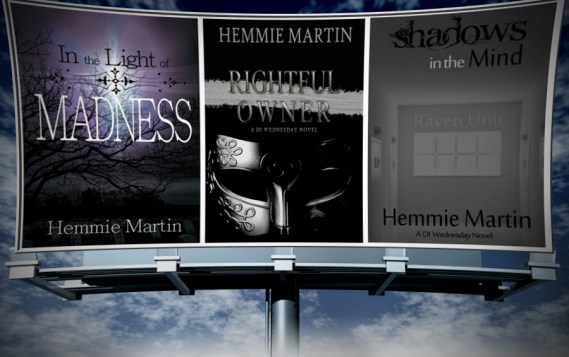
 What happens after the murder? A killing has occurred during a Parting Ways weekend, where couples attempt to divorce amicably. The fallout points in many directions as Wednesday and Lennox are faced with a widow, sparring couples, the group facilitators, and the hotel staff, all as suspects. While the confounding case strengthens Wednesday’s negative views on relationships, it brings Lennox to a place of reflection as he analyses his past and contemplates his future.
 Alice Calwin finds herself without purpose in life after the death of her mother, whom she’d been caring for following a stroke. Theo Edwards, a literary journalist, has a sour outlook on life, bolstered by his ongoing divorce, and is feeling the pressure to revitalise his column in the newspaper.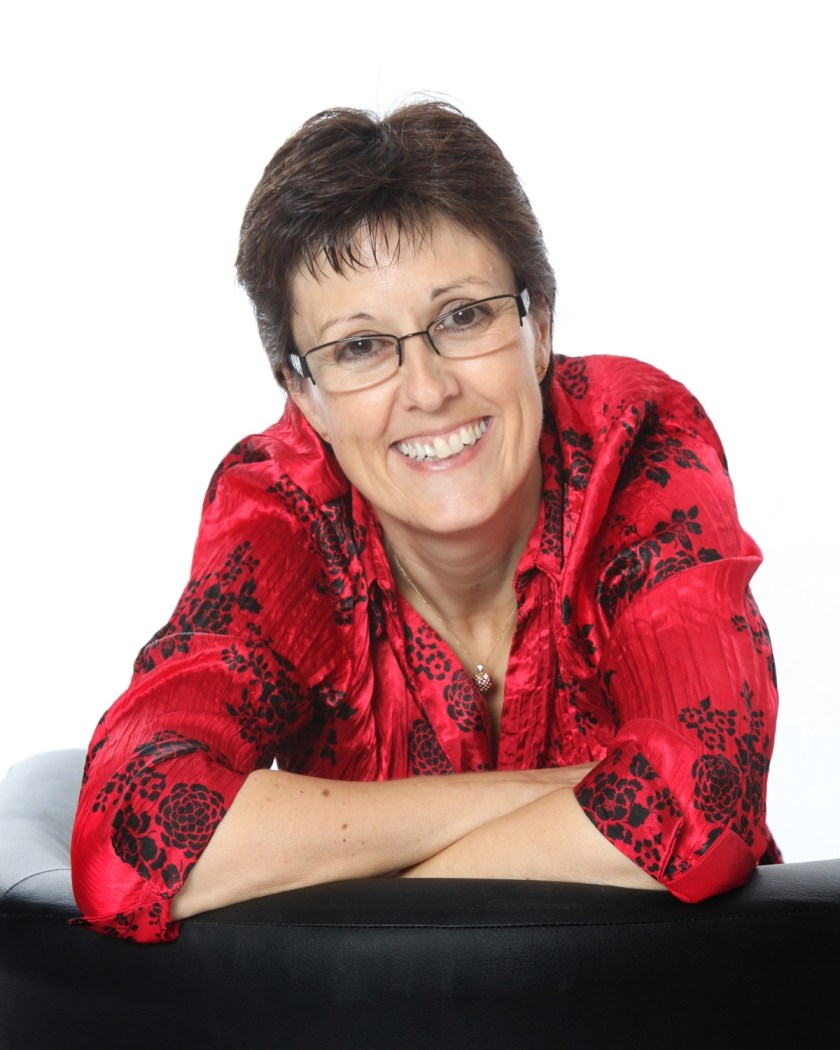
 main characters in WDKY, had received such a gift, she would have written the moment down on a slip of paper and popped it into her Happiness jar.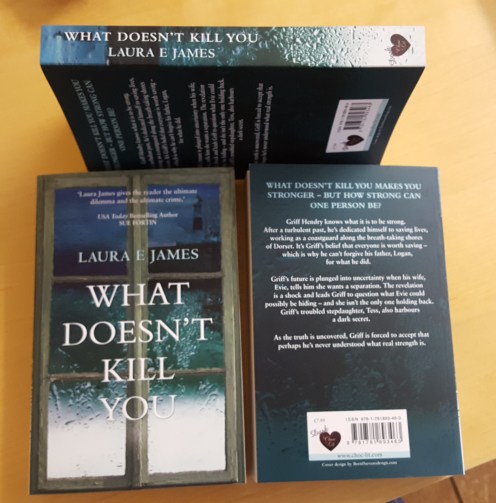

 ABOUT KAREN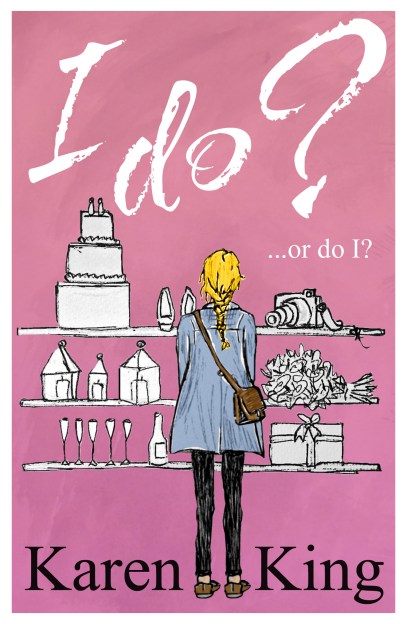
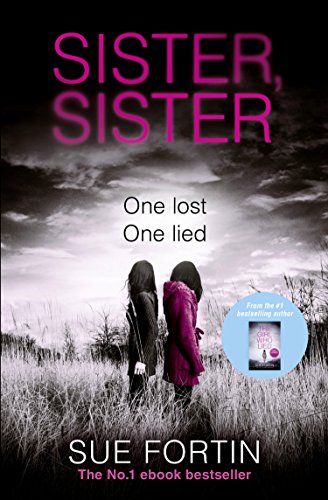
 Published by Harper Collins’ imprint Harper Impulse, Sue Fortin writes gripping dramas.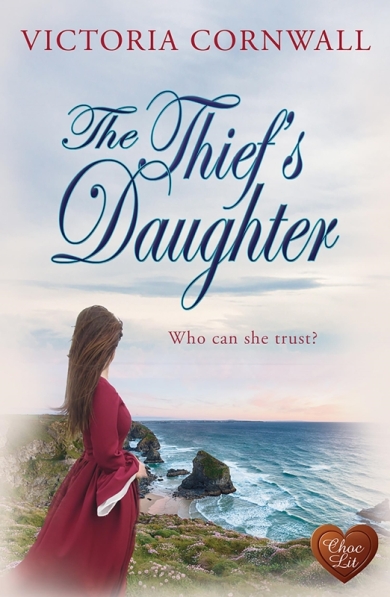
 Victoria Cornwall grew up on a farm in Cornwall. She can trace her Cornish roots as far back as the 18th century and it is this background and heritage which is the inspiration for her Cornish based novels.
 JO LAMBERT