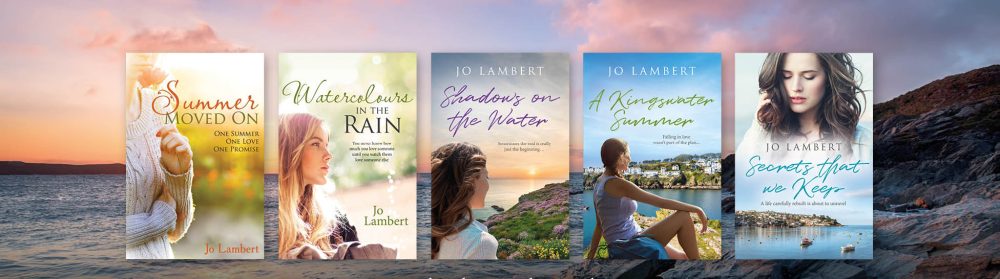
Day two and it’s Luke’s turn under the spotlight.
It’s hard to imagine that when I began writing this book Luke was set up to be the villain. After all with his disadvantaged background he definitely has the makings of an anti-hero. However, right from the start, casting Luke as the bad guy simply didn’t work. So I sat down and did some reworking of the plot and turned him into the book’s hero instead.
As I said above, Luke came from a disadvantaged background. His mother Selina, the daughter of a wealthy local family, was a wild child of the 80s who got herself pregnant by one of her father’s employees. He left the area before he knew her situation and never returned. Eighteen year old Selina, always the rebel, left home and secretly married Ross Carrick, one of Carrenporth’s fishermen. Ross was ten years older than Selina, but he’d always loved her, even though he felt she was out of reach and all they had was friendship. When Luke was born he took Ross’s surname. For a few years his childhood was a happy one, despite being ostracised by his mother’s family and most of Carrenporth. Then when he was fourteen tragedy struck. Ross’s trawler sank with all hands on board off the Scilly Isles. Selina, never a strong character could not cope and took refuge in drink. Within in year she too was dead. Much to everyone’s surprise Selina’s brother Gareth who now owned the family business, stepped in to give Luke a home and educate him. This angered his social climbing wife Evie who felt Selina’s son had no place in their home, living alongside her own son Jordan. While Jordan exhibited all the traits of an overindulged layabout, Luke achieved good school grades and worked for Gareth for a while before going on to university. After successfully completing his degree he left to travel for a couple of years with a promise to come back and work for his uncle. Now he’s returned to a place that has changed very little since his departure. A large portion of this small minded community still view him as Selina Hunter’s illegitimate son and his aunt still detests him. But Gareth, impressed by his nephew’s work ethic, is about to reward him. And the job he has in mind is set to stir up even more hate and resentment from Evie and Jordan…

Even in your hometown, you can feel like an outsider …
In the close-knit community of Carrenporth in Cornwall everyone knows everyone else’s business. Luke Carrack is only too aware of this. He’s been away for two years but nothing has changed – from the town gossips who can’t see past the scandal of his childhood, to the cold way he is treated by some of his so-called family.
The only person who seems to understand is local hotelier’s daughter Cat Trevelyan, although even Luke’s new friendship with her could set tongues wagging.
But Carrenporth is about to experience far bigger scandals than the return of Luke Carrack – and the secrets unearthed in the process will shake the sleepy seaside town to its core …
Amazon Buy Links
📚 https://amzn.to/31EQfMH
🔊 https://amzn.to/2XkRPnA
Also available on Amazon : Kobo : Nook: Google Play and Apple iBook Store



 As a writer if there’s one thing I’m grateful for it’s the ability to type. Finishing school I enrolled at college for an OND in Business and Finance with secretarial training. The latter was very much involved with unlocking the mysteries of shorthand, audio typing…and typing.
 total revolution! At last we were all able to say goodbye to aching fingers. Everyone coveted – and I was lucky enough to have – a red IBM Golf Ball typewriter and at the start it took some getting used to. No more keys leaping out of the type basket to make their impact on paper; this circular metal ball covered in letters simply whizzed up and down. There were downsides of course. It wasn’t a good idea to rest your fingers on the keyboard at any time as the slightest pressure on any one key would automatically set it off like a machine gun, leaving a trail of gibberish across whatever you were in the middle of typing. Olivetti also produced an electric daisy wheel typewriter. The beauty of this machine was that you could
  buy replacement wheels with different typefaces making it a very versatile piece of equipment. Today, of course, the computer leaves us spoiled for choice with innumerable typeface options, so different from those dark days!
 used had a small window built into the front to enable text to be edited – very cutting edge at the time. By the late ‘80’s early ‘90’s computers/word processors were beginning to become norm in the provincial workplace (no doubt London and other big cities had had them for some time). My first session on a word processor was surreal. In the past typing had been about movement and noise. Now here I was, sitting in front of a strange detached keyboard. When my fingers hit keys there was a gentle tapping sound but nothing felt as if it had connected with anything else. It was only when I raised my eyes to the screen in front of me that I saw words appearing as if by magic. It was probably as weird an experience as the progression from manual to electric typewriter.
 In early desktop computers WP packages were almost an afterthought and in some instances not very user friendly. Therefore I opted for a dedicated word processor instead, using the computer for spreadsheets and databases. Suddenly it seemed you no longer needed to be able to type to use a computer. Of course it completely transformed how things were done in the workplace. A manager doing his own typing? Shock, horror! That would have been unheard of during my early years at work. Then it was all about dictation and audio tapes and getting the secretary to type it all up. It took a little time to adjust to typing on a computer keyboard but I got there and soon worked up to my 80+ words per minute. There is only one problem I have and that is as a touch typist I find it very difficult to build up any speed on a ‘flat’ laptop keyboard. That is why, I guess, I prefer my desktop.
 I’m 54 years old and very proud of my age. It’s the time in my life where I feel most comfortable with myself and with who I am. It’s taken me along time to get to this place where I think life is just what it is…it’s just life…just live it.


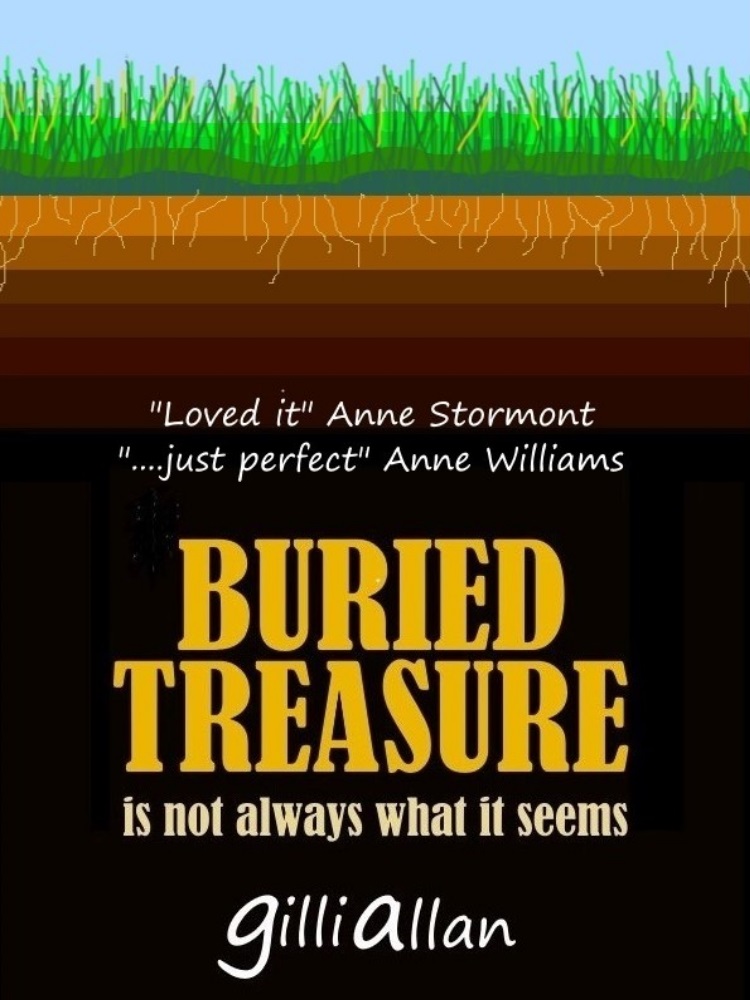
 Gilli Allan began to write in childhood – a hobby pursued throughout her teenage. Writing was only abandoned when she left home, and real life supplanted the fiction.