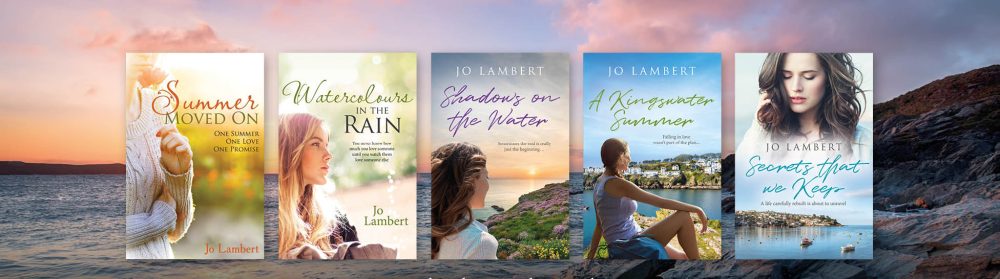
As I’m away for a few days, I thought I’d introduce three of the main characters from my current novel.
Today it’s Cat Trevelyan’s turn. She is the central female character and the story is mainly narrated from her viewpoint. Together with her twin brother Nathan she is the fourth generation of the Trevelyan family to make a career in the hotel business.
The Tarwin House Hotel sits on the cliffs overlooking the fishing port of Carrenporth on the North Coast of Cornwall just to the south of Newquay. It was originally built by Cat’s ancestor Jago Menhenick in the 1800s as a monument to his successful businesses in copper and tin. It remained the family’s home until her great grandfather Edgar decided to open it as a hotel. Over the years it has been gradually extended and is now run by Cat and Nathan’s father Ruan Trevelyan.
Nathan works as the hotel’s deputy manager and also runs the basement nightclub Ship2Shore while Cat is an events planner in charge of the hotel’s functions suite. She’s hard working, a bit of a perfectionist and maybe even a little too work focussed at times. Rarely having time for dating, she enjoys her single life, mostly girls’ evenings out with her best friend Jodie Penwarne. She’s close to her father and has a soft spot for her difficult Great Aunt Emelia. She can also be a bit prickly at times and doesn’t suffer fools gladly. As Luke tells her during one of their spats ‘…you need to cut yourself some slack when you’re off duty, Cat. Who knows, there might be a real nice girl lurking under all that spit and fur.’
Cat’s first meeting with Luke Carrack does not go well. She sees him as an arrogant know all and tries to avoid him as much as possible. However he seems to regularly turn up in the most unexpected places, always making her feel irritable and angry. But when things go wrong at a wedding reception where he’s a guest, through his actions she begin to see him in a completely different light. Of course it would be too easy to let the course of true love run smoothly. Once they get together are a tremendous amount of obstacles these two have ahead of them….but you’ll have to read the book to discover what happens and whether they get their happy ending.

Even in your hometown, you can feel like an outsider …
In the close-knit community of Carrenporth in Cornwall everyone knows everyone else’s business. Luke Carrack is only too aware of this. He’s been away for two years but nothing has changed – from the town gossips who can’t see past the scandal of his childhood, to the cold way he is treated by some of his so-called family.
The only person who seems to understand is local hotelier’s daughter Cat Trevelyan, although even Luke’s new friendship with her could set tongues wagging.
But Carrenporth is about to experience far bigger scandals than the return of Luke Carrack – and the secrets unearthed in the process will shake the sleepy seaside town to its core …
Amazon Buy Links
📚 https://amzn.to/31EQfMH
🔊 https://amzn.to/2XkRPnA
Also available on Amazon : Kobo : Nook: Google Play and Apple iBook Store


 As a writer if there’s one thing I’m grateful for it’s the ability to type. Finishing school I enrolled at college for an OND in Business and Finance with secretarial training. The latter was very much involved with unlocking the mysteries of shorthand, audio typing…and typing.
 total revolution! At last we were all able to say goodbye to aching fingers. Everyone coveted – and I was lucky enough to have – a red IBM Golf Ball typewriter and at the start it took some getting used to. No more keys leaping out of the type basket to make their impact on paper; this circular metal ball covered in letters simply whizzed up and down. There were downsides of course. It wasn’t a good idea to rest your fingers on the keyboard at any time as the slightest pressure on any one key would automatically set it off like a machine gun, leaving a trail of gibberish across whatever you were in the middle of typing. Olivetti also produced an electric daisy wheel typewriter. The beauty of this machine was that you could
  buy replacement wheels with different typefaces making it a very versatile piece of equipment. Today, of course, the computer leaves us spoiled for choice with innumerable typeface options, so different from those dark days!
 used had a small window built into the front to enable text to be edited – very cutting edge at the time. By the late ‘80’s early ‘90’s computers/word processors were beginning to become norm in the provincial workplace (no doubt London and other big cities had had them for some time). My first session on a word processor was surreal. In the past typing had been about movement and noise. Now here I was, sitting in front of a strange detached keyboard. When my fingers hit keys there was a gentle tapping sound but nothing felt as if it had connected with anything else. It was only when I raised my eyes to the screen in front of me that I saw words appearing as if by magic. It was probably as weird an experience as the progression from manual to electric typewriter.
 In early desktop computers WP packages were almost an afterthought and in some instances not very user friendly. Therefore I opted for a dedicated word processor instead, using the computer for spreadsheets and databases. Suddenly it seemed you no longer needed to be able to type to use a computer. Of course it completely transformed how things were done in the workplace. A manager doing his own typing? Shock, horror! That would have been unheard of during my early years at work. Then it was all about dictation and audio tapes and getting the secretary to type it all up. It took a little time to adjust to typing on a computer keyboard but I got there and soon worked up to my 80+ words per minute. There is only one problem I have and that is as a touch typist I find it very difficult to build up any speed on a ‘flat’ laptop keyboard. That is why, I guess, I prefer my desktop.
 I’m 54 years old and very proud of my age. It’s the time in my life where I feel most comfortable with myself and with who I am. It’s taken me along time to get to this place where I think life is just what it is…it’s just life…just live it.


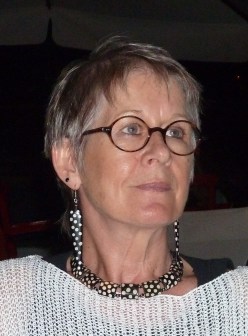 Gilli Allan began to write in childhood – a hobby pursued throughout her teenage. Writing was only abandoned when she left home, and real life supplanted the fiction.
 JO LAMBERT